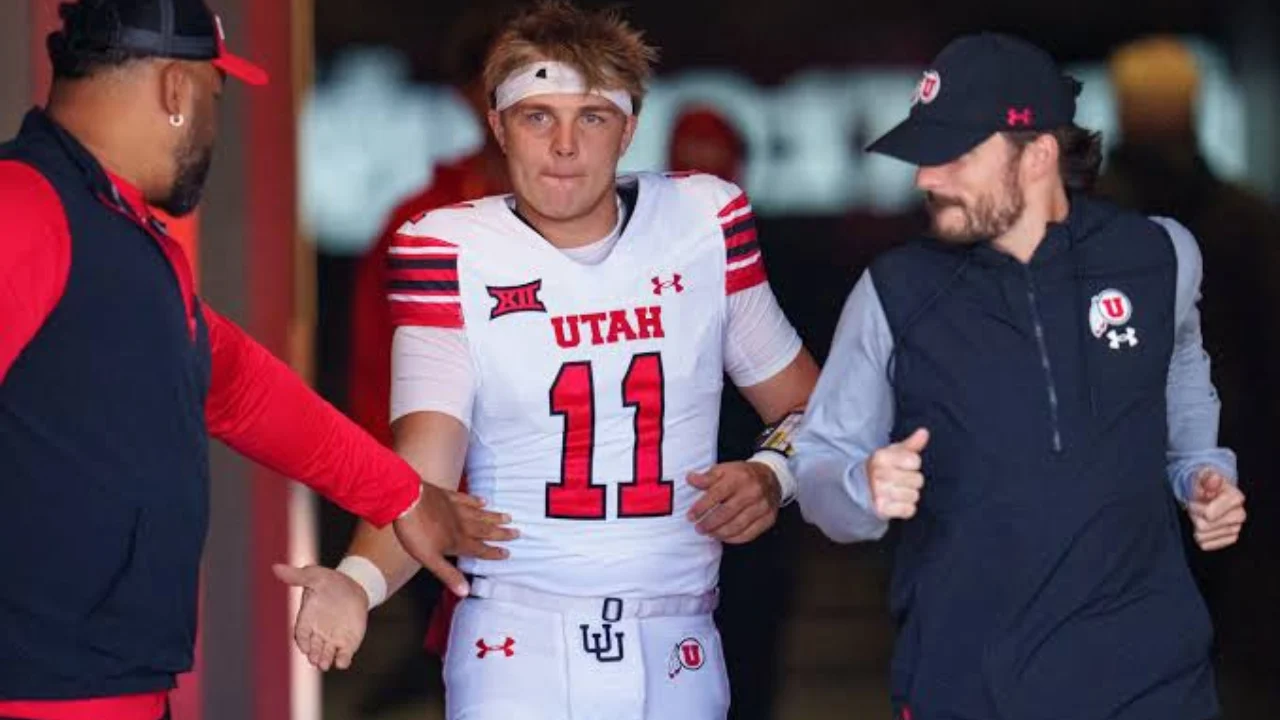
Isaac Wilson appeared ready to move on from Utah.
After spending much of the previous season as the Utes’ starting quarterback, Wilson entered the transfer portal and appeared to be preparing for a new chapter in his college football career.
The decision did not come completely out of nowhere.
Utah had made a move of its own at the quarterback position. The program and new offensive coordinator Jason Beck pursued Devon Dampier as a potential new starter. That development changed the situation for Wilson and created uncertainty about where he would fit into Utah’s plans.
For a quarterback who had already started much of the previous season, the possibility of losing his place at the top of the depth chart was obviously significant.
Wilson responded by entering the transfer portal.
But the story did not end there.
Before the portal closed, Wilson had a change of heart and decided to return to Utah.
His decision created an interesting turn in the Utah football story. What initially looked like the end of Wilson’s time with the Utes became a return, giving him another opportunity to compete and continue his development in familiar surroundings.
Isaac Wilson Was Ready to Leave Utah
When Wilson entered the transfer portal, it looked like his time with Utah was coming to an end.
He had been the starting quarterback for much of the previous season, so his decision was notable. Quarterbacks who have already gained starting experience often have plenty to consider when their position suddenly becomes uncertain.
The situation at Utah had changed.
The Utes were working with new offensive coordinator Jason Beck, and the program pursued Devon Dampier as a new quarterback option. That pursuit naturally raised questions about Wilson’s future.
For Wilson, the issue was not simply about leaving a school where he had played football.
It was about finding a situation where he could continue to develop and compete for meaningful playing time.
Entering the transfer portal gave him the opportunity to explore those possibilities.
At that point, it would have been reasonable for fans to assume that Wilson’s Utah chapter was finished.
But college football decisions can change quickly.
Utah’s Quarterback Situation Had Changed
The arrival of a new offensive coordinator can have a major effect on a college football program.
A new coordinator can bring a different offensive system, different preferences and different ideas about the type of quarterback needed to run the offense.
For Wilson, the change involving Jason Beck was particularly important.
Utah had also pursued Devon Dampier as a starting quarterback, making the competition at the position even more complicated.
Wilson had already experienced starting football at Utah, but the program’s interest in another quarterback suggested that there could be a major change ahead.
That uncertainty appears to have played a role in Wilson’s decision to enter the portal.
The transfer portal has become one of the defining features of modern college football. Players can explore other programs when their circumstances change, and quarterbacks are among the positions where those decisions can have an especially large impact.
For Wilson, entering the portal meant he was no longer limited to waiting to see how the Utah quarterback competition developed.
He could look at other opportunities.
Wilson Had Already Started for the Utes
One reason Wilson’s transfer decision attracted attention was his previous role at Utah.
He had been the team’s starting quarterback for much of the previous season.
That experience matters.
Starting at the college level is not something every young quarterback gets to experience. It gives a player valuable game experience, but it can also create expectations.
Once a quarterback has started games, moving back into a backup role can be a difficult adjustment.
Wilson therefore had a meaningful decision to make.
He could stay at Utah and compete within a changing quarterback room, or he could explore the transfer portal and potentially find another program where the path to playing time appeared clearer.
Initially, he chose to explore the second option.
Entering the Transfer Portal Was Not the Final Decision
The most interesting part of Wilson’s story is that entering the transfer portal did not ultimately mean he would leave Utah.
College football’s transfer process allows players to explore their options, but entering the portal does not necessarily guarantee that a player will transfer.
Circumstances can change.
Conversations can happen.
A player can reconsider what is most important for his development and future.
That appears to be what happened with Wilson.
After entering the portal, he ultimately decided that staying at Utah was the better choice.
Before the portal closed, he changed his mind and returned to the Utes.
That reversal transformed the story from a simple transfer announcement into a much more interesting question about Wilson’s future in Salt Lake City.
Why Returning to Utah Made Sense
There are several natural reasons a quarterback might reconsider a transfer after entering the portal.
Familiarity is one.
Wilson already knew Utah’s program, teammates and environment. He had experienced the demands of playing quarterback for the Utes and understood what would be expected of him.
Starting over at another school can be appealing, but it also means adjusting to a new coaching staff, new teammates, a new playbook and a different environment.
Staying at Utah offered Wilson continuity.
He also already had experience within the program.
That does not guarantee a starting job, especially after Utah pursued another quarterback, but it does give a player an established foundation.
For a young quarterback, that can be valuable.
Wilson’s decision ultimately suggests that he believed remaining at Utah was worth another opportunity.
The Quarterback Competition Became More Interesting
Wilson’s return also made Utah’s quarterback situation more intriguing.
Instead of simply moving forward with a new quarterback, the Utes now had Wilson back in the picture.
That creates competition.
Competition can be uncomfortable, but it can also make a position group stronger. Quarterbacks have to earn their opportunities, and returning players have to show that their previous experience translates into continued production.
For Wilson, returning to Utah meant accepting that the situation might not be exactly the same as it had been before.
He had entered the portal because his position had become uncertain.
By coming back, he was effectively choosing to face that uncertainty rather than simply escape it.
That is an important part of the story.
Jason Beck’s Role in the Situation
Jason Beck became part of the story because he was Utah’s new offensive coordinator during this period of change.
A new offensive coordinator often brings a new approach to the quarterback position.
The offensive coordinator works closely with quarterbacks, helping shape the system and deciding how the offense will operate.
For Wilson, Beck’s arrival represented a new chapter.
The fact that Utah pursued Devon Dampier showed that the coaching staff was evaluating its options at quarterback.
Wilson therefore had to make a decision about his own future within that changing structure.
Entering the portal was one answer.
Returning was another.
Ultimately, Wilson chose to remain in the program.
Devon Dampier Added Another Layer to the Story
The pursuit of Devon Dampier was important because it gave the quarterback situation another central figure.
Utah was not simply making a coaching change. The program was also looking at quarterback options.
That meant Wilson’s position was not guaranteed simply because he had started much of the previous season.
College football is highly competitive, and depth charts can change quickly.
A quarterback can have starting experience and still find himself competing for the job the following season.
That reality is especially important in the transfer portal era.
Players now have more options when they believe another opportunity could be better for them.
Wilson used that option, at least briefly.
Then he decided that Utah remained the right place for him.
Wilson’s Decision Shows How Quickly College Football Can Change
The entire sequence happened relatively quickly.
Wilson was Utah’s starting quarterback for much of the previous season.
Then the program pursued another quarterback while working with a new offensive coordinator.
Wilson entered the transfer portal.
Then, before the portal closed, he reversed course.
That is a lot of movement for one player in a short period.
It also shows how complicated decisions have become for college football players.
A quarterback has to think about playing time, coaching, development and the possibility of competing for a starting job.
There is no guarantee that leaving will produce a better situation.
There is also no guarantee that staying will result in the same role a player previously had.
Wilson ultimately decided that staying was worth the challenge.
What Wilson’s Return Means for His Development
Returning to Utah gives Wilson another chance to develop within a program he already knows.
He has experienced college football as a starter, which gives him a foundation that cannot simply be taught in practice.
Game experience can help a quarterback understand how to handle pressure, make decisions and respond when things do not go according to plan.
Wilson now has another opportunity to build on that experience.
The return does not remove the competition at quarterback.
Instead, it gives him a chance to compete within a familiar environment.
For a young player, that could prove valuable.
The next stage of his career will depend on how he handles the competition and what he can show on the field.
The Transfer Portal Decision Does Not Define Wilson’s Career
It would be easy to look at Wilson’s brief time in the transfer portal as the defining part of this story.
But it is really just one chapter.
The more important part may be what he does after returning to Utah.
Entering the portal was a decision based on uncertainty.
Returning was another decision based on what Wilson ultimately believed was best for him.
Neither decision guarantees success.
What matters now is his development and performance.
Football careers rarely follow a perfectly straight path. Players change schools, coaches change, depth charts change and opportunities appear unexpectedly.
Wilson has already experienced that reality.
Isaac Wilson’s Utah Story Took an Unexpected Turn
Isaac Wilson looked ready to leave Utah.
After starting much of the previous season, he found himself facing a new quarterback situation after Utah and offensive coordinator Jason Beck pursued Devon Dampier.
Wilson entered the transfer portal, opening the possibility of continuing his career somewhere else.
Then everything changed.
He reconsidered his decision and returned to Utah before the portal closed.
That choice gives Wilson another opportunity with the Utes and adds an interesting twist to the program’s quarterback story.
Instead of moving on, he chose to stay and compete.
For Utah, having a quarterback with previous starting experience back in the program can be important.
For Wilson, the return provides another chance to prove what he can do.
The quarterback position remains one of the most closely watched areas of any college football team, and Wilson’s decision ensures that his future will continue to be part of the conversation.
His transfer portal entry may have suggested that his Utah story was ending.
Instead, it became a new beginning.
Now the focus shifts back to the field, where Wilson will have the opportunity to show why he ultimately decided that Utah was still the right place for him.