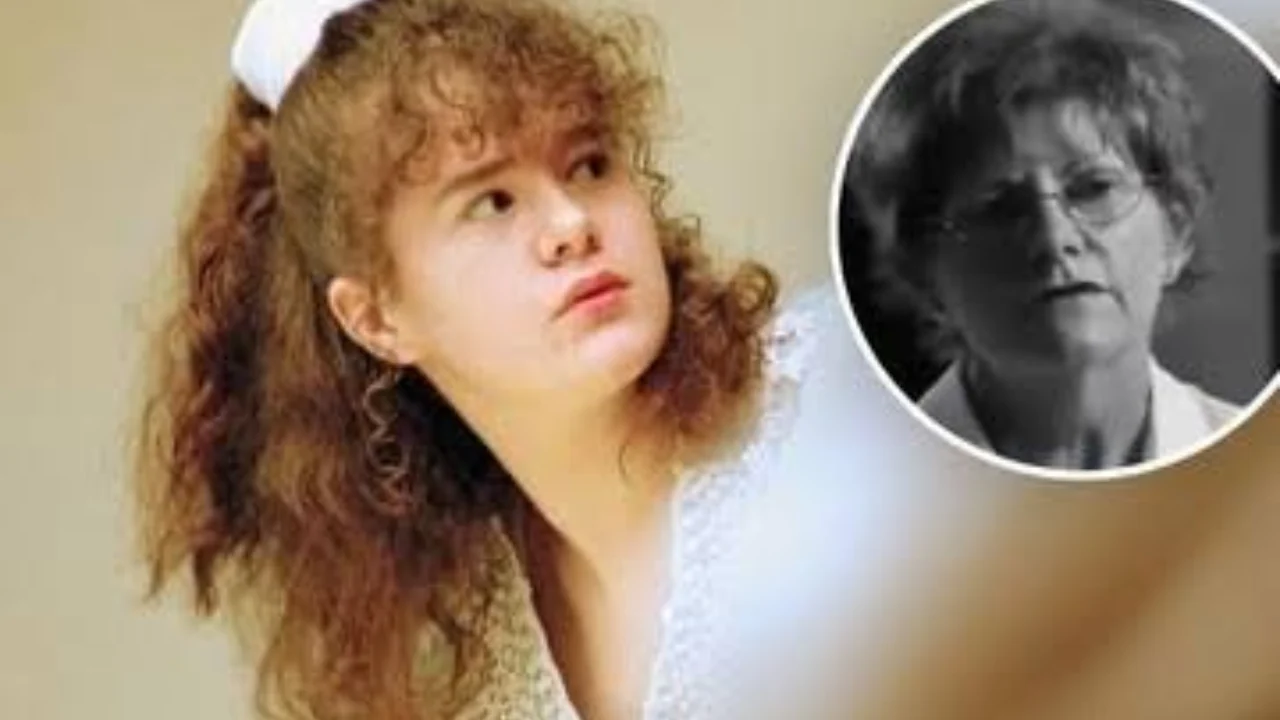
Carissa Hansen is known publicly as the mother of Christa Pike, the Tennessee death row inmate whose failed execution in September 2026 brought her decades-old case back into the spotlight.
There is not a large amount of publicly available information about Hansen’s own life. Most of what has been reported about her comes through accounts of Pike’s childhood and a 2006 interview conducted by journalist Helen Roberts, who met Pike on death row.
In that interview, Pike described growing up in a difficult home environment. Her parents, Carissa Hansen and Glenn Pike, were described as alcoholics who neglected her. Pike also spoke about experiencing abuse and feeling that she had little love or stability during her childhood.
Those details became an important part of the discussion around Pike’s life, although they did not excuse the murder for which she was convicted.
Pike was 18 when she and her then-boyfriend, Tadaryl Shipp, were involved in the 1995 killing of 19-year-old Colleen Slemmer. Pike was sentenced to death in 1996 and eventually spent decades on Tennessee’s death row.
Her scheduled execution on September 30, 2026, ended in an extraordinary development when she survived two lethal doses and was taken to a hospital.
As the case returned to the headlines, attention also turned to Pike’s upbringing and the role her parents played in her early life.
Who Is Carissa Hansen?
Carissa Hansen is Christa Pike’s mother.
Beyond that basic connection, relatively little verified information about Hansen’s personal life has been provided in the source material.
The details that have received attention are mainly connected to Pike’s description of her childhood. According to Roberts’ account of her 2006 interview with Pike, Pike grew up in Beckley, West Virginia, a small working-class city in the southern part of the state.
Pike described her parents, Carissa Hansen and Glenn Pike, as alcoholics who neglected her.
That description forms much of the available public picture of Hansen.
It is important not to turn limited information into a complete biography. The available account does not provide a detailed history of Hansen’s childhood, career, later years or personal circumstances. It mainly establishes her as Pike’s mother and describes the troubled home environment Pike said she experienced.
Christa Pike’s Difficult Childhood
Pike’s childhood was one of the most significant parts of her story when Roberts interviewed her in 2006.
At the time, Pike had already spent 11 years on death row. Roberts wanted to understand the woman behind the crime and what had happened in her life before she entered the Tennessee Job Corps program.
Pike told Roberts that she did not feel she had received much love while growing up.
The one major exception she remembered was her grandmother.
According to Roberts, Pike said she had felt that she had “no love” apart from her grandmother, who died from cancer when Pike was 12.
That loss was described as an important emotional turning point in Pike’s childhood.
Pike also told Roberts about other traumatic experiences. She said she had been raped at 11 by a neighbor and again at 17 by a stranger who dragged her into the woods.
She experienced periods of neglect and abuse and moved from one school to another.
Eventually, she joined the Knoxville Job Corps program at 18, hoping that it would provide a fresh start.
What Did Christa Pike Say About Her Parents?
The account of Pike’s interview provides a difficult description of her family background.
Pike’s parents, Carissa Hansen and Glenn Pike, were described as alcoholics who neglected her.
However, the source does not provide a detailed interview with Hansen herself. The comments about the family come primarily through Pike’s account as recalled by Roberts.
That distinction matters.
There is a difference between reporting what Pike said about her childhood and making additional claims about Hansen’s actions or intentions that are not supported by the available information.
What can be established from the account is that Pike described her childhood as unstable and lacking the care she felt she needed.
She also connected some of her emotional struggles to experiences from childhood, including the death of her grandmother and the abuse she said she suffered.
Carissa Hansen and Pike’s Family Background
Pike grew up in Beckley, West Virginia.
The community was described as a small, working-class city in southern West Virginia. Her family life, however, was reportedly difficult.
The account portrays a young girl moving between schools and dealing with instability at home.
Pike eventually reached adulthood carrying experiences that Roberts believed were important to understanding the person she became.
That does not mean her childhood explains away the crime.
Roberts was clear about this point. She said that nothing about her account of Pike was intended to diminish the seriousness of Slemmer’s murder.
Pike was convicted for taking another person’s life and was sentenced to death.
At the same time, Roberts believed it was possible to acknowledge Pike’s humanity and her difficult childhood while still recognizing the harm she caused.
Pike’s Grandmother Was an Important Figure
One of the strongest positive relationships described from Pike’s childhood was with her grandmother.
Pike reportedly remembered her grandmother as the person who gave her love during a childhood when she otherwise felt neglected.
Her grandmother died of cancer when Pike was 12.
According to Roberts, that loss contributed to a period of rage and suicidal thoughts for Pike.
The grandmother’s death therefore stands out as an important moment in the childhood story Pike later told.
There is no indication in the supplied account that Carissa Hansen was involved in replacing that emotional support after the grandmother died.
Instead, Pike described herself as continuing to struggle with neglect and abuse.
Abuse Pike Described Before the Murder
Pike’s childhood account included serious allegations of sexual abuse.
She told Roberts that she was raped by a neighbor at age 11.
She also said she was raped again at 17 by a stranger who dragged her into the woods.
These experiences were part of the background Pike discussed while explaining her life before the murder.
They also formed part of the broader argument made by her lawyers decades later as they sought clemency.
Pike’s legal team argued that her childhood and mental health should be considered when determining whether she should be executed.
However, her history did not change the conviction or the fact that she was responsible for Slemmer’s death.
From West Virginia to Tennessee
Pike’s childhood in West Virginia eventually led her toward a different life.
At 18, she joined the Knoxville Job Corps program.
She reportedly hoped to become a nurse.
It was there that she met Colleen Slemmer, a 19-year-old student, as well as Tadaryl Shipp.
What was supposed to be a new beginning instead became the setting for a crime that changed several lives forever.
Pike and Shipp were later convicted in connection with Slemmer’s murder.
Pike received a death sentence.
Shipp, who was 17 at the time, received a life sentence with the possibility of parole.
Christa Pike’s Relationship With Her Mother
The available information does not provide a detailed account of Pike’s adult relationship with Carissa Hansen.
There are no substantial details in the supplied material about whether they remained close, how often they communicated or what their relationship was like after Pike was sentenced to death.
That makes it difficult to draw conclusions about their later relationship.
The most documented information concerns Pike’s childhood.
Pike described her parents as alcoholics who neglected her and said that she did not experience much love at home.
That is the main context in which Carissa Hansen’s name appears in accounts of her daughter.
It would be misleading to add details about Hansen’s later life that are not supported by reliable information.
Helen Roberts’ Meeting With Christa Pike
In December 2006, journalist Helen Roberts traveled from Wales to Tennessee to interview Pike for More Magazine.
Roberts had never previously visited a prison, and she recalled feeling nervous before entering the maximum-security facility.
Pike was then 30 years old and had already spent 11 years on death row.
The interview took place through a glass window, with Roberts and Pike speaking through a speaker system.
Roberts expected to meet someone who would be difficult or intimidating.
Instead, she found Pike surprisingly warm and open.
Pike smiled, laughed and answered Roberts’ questions.
The two women were relatively close in age, and Roberts said they found some small similarities that helped create a sense of common ground.
That experience stayed with Roberts for years.
Pike Talked About Her Childhood and the Murder
During the interview, Pike discussed both her childhood and the crime.
Roberts said Pike spoke about the murder in a matter-of-fact way.
Pike reportedly described herself at the time of the killing as a very different person from the woman she had become in prison.
She said she had “lost her mind” that night and described the experience as almost being outside herself.
Pike also told Roberts that she was deeply sorry for what she had done.
She did not believe anything she could say would compensate for what happened to Slemmer.
That distinction became important to Roberts, who tried to understand Pike without excusing her actions.
The Question of Childhood and Responsibility
Pike’s difficult childhood has continued to raise questions about how much a person’s early experiences can influence later behavior.
Roberts reflected on this issue after Pike’s failed execution in 2026.
She believed Pike’s childhood experiences helped shape the person she eventually became, while also making clear that this did not erase her responsibility for Slemmer’s death.
It is a difficult distinction.
A person’s background can help explain their development without becoming a justification for a serious crime.
That was essentially the tension Roberts carried with her after meeting Pike.
She saw a human being in front of her, but she also knew what that woman had been convicted of doing.
Carissa Hansen and the Public Story Around Pike
Because Carissa Hansen was Pike’s mother, her name is sometimes searched alongside the Christa Pike case.
But there is an important limitation to the available information.
Most of the reporting is about Pike, not Hansen.
The source material does not offer a detailed biography of Hansen or a substantial account of her life after Pike’s childhood.
What it does provide is Pike’s description of her family environment.
Hansen and Glenn Pike were described as alcoholics who neglected their daughter.
That background became relevant when Pike’s childhood was discussed during the debate over her death sentence.
Pike’s Death Row Years
By the time Roberts met Pike, she had spent 11 years on death row.
Her life was highly restricted.
Roberts said Pike was incarcerated for roughly 23 hours a day and was sometimes allowed out for only an hour.
She was the only woman on Tennessee’s death row, meaning she could not mix with other prisoners in the same way many inmates could.
She developed routines around reading, watching television and writing to pen pals.
After the interview, Roberts received a handmade card from Pike.
The card was made from purple paper and shaped like a butterfly. Pike thanked Roberts for being kind to her and for treating her as a woman.
For Roberts, that small gesture remained particularly poignant.
The 2026 Execution and Renewed Interest in Her Childhood
Pike’s scheduled execution in September 2026 brought her story back into public view.
After years of legal battles, she was finally due to be executed.
Her lawyers sought clemency, arguing that her childhood trauma and mental health history deserved consideration.
The request was rejected.
But the execution itself became highly unusual.
Pike survived two doses of pentobarbital and was eventually taken to a hospital in critical condition.
The event led Tennessee Gov. Bill Lee to order an independent review and halt the state’s remaining scheduled executions for 2026.
As a result, public attention once again turned toward Pike’s history, including her childhood and her parents.
What We Know About Carissa Hansen Today
There is no detailed, verified account in the supplied material of Carissa Hansen’s current life.
That is important because online searches can sometimes produce claims about relatives that are not properly supported.
The available account establishes that Hansen was Christa Pike’s mother and that Pike described her parents as alcoholics who neglected her.
Beyond those details, there is not enough information here to responsibly describe Hansen’s current whereabouts, occupation, relationships or circumstances.
It is better to acknowledge that gap than to fill it with speculation.
The Bottom Line
Carissa Hansen is the mother of Christa Pike, the Tennessee death row inmate whose failed execution in 2026 brought renewed attention to her decades-old murder conviction.
The most detailed information about Hansen comes through Pike’s account of her childhood, as recalled by journalist Helen Roberts after a 2006 death row interview.
Pike grew up in Beckley, West Virginia, and described her parents, Carissa Hansen and Glenn Pike, as alcoholics who neglected her. She said she felt she had little love in her childhood apart from her grandmother, who died from cancer when Pike was 12.
Pike also described suffering serious abuse during childhood and adolescence. She moved between schools before joining Knoxville Job Corps at 18, where she hoped to start over and reportedly wanted to become a nurse.
That new beginning ended tragically.
In 1995, Pike and her then-boyfriend Tadaryl Shipp were involved in the murder of 19-year-old Colleen Slemmer. Pike was convicted and sentenced to death, while Shipp, who was 17 at the time, received a life sentence with the possibility of parole.
Pike spent decades on death row before her scheduled execution in September 2026 ended without her death after two lethal doses were administered.
The story of Carissa Hansen remains closely tied to the difficult childhood Pike described, but the public record supplied here contains relatively little information about Hansen herself. What remains clear is that Pike’s early family life became an important part of the discussion surrounding the woman she became and the extraordinary case that followed