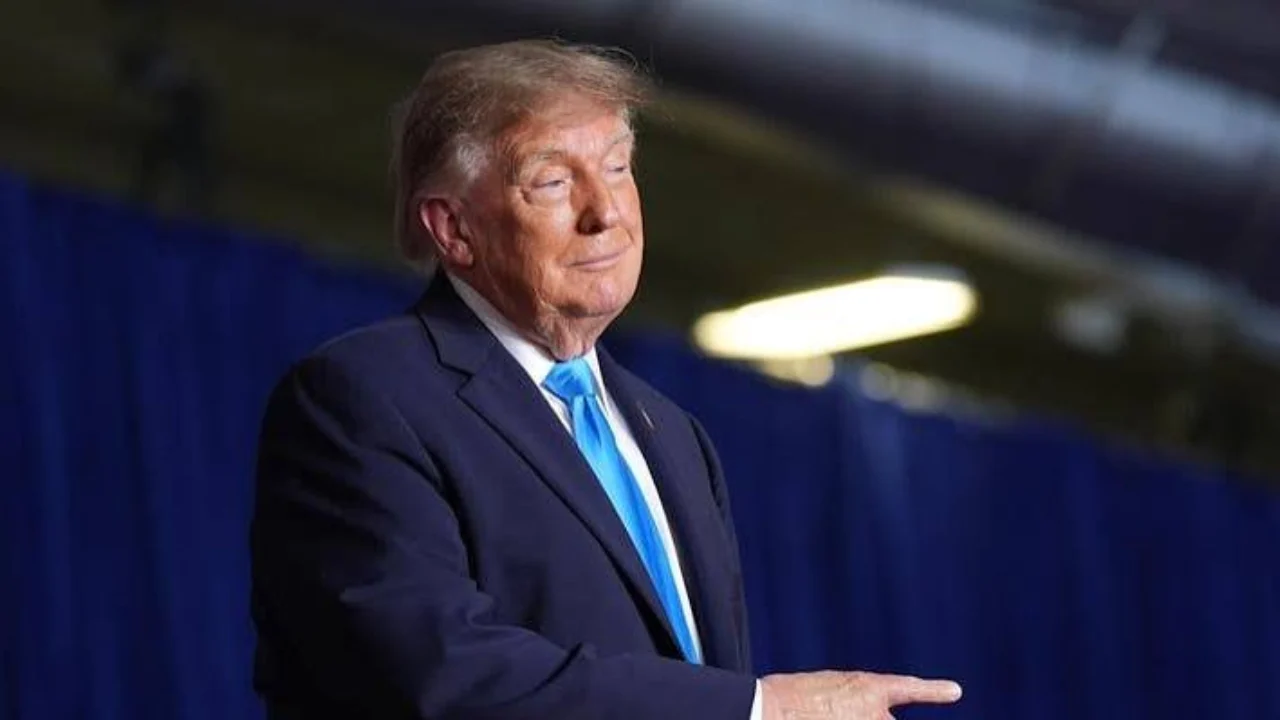
President Donald Trump has sparked a fresh political controversy after making remarks about Los Angeles and San Diego while discussing the ongoing war with Iran and the rising cost of fuel.
Speaking at a rally in Grand Island, Nebraska, Trump was talking about higher gasoline prices and argued that the increase was a relatively small cost compared with what he described as the broader goal of keeping the United States and the world safe.
During that discussion, he said Iran could “take out a city” before naming Los Angeles and San Diego.
Trump then described the potential loss as a “very small price to pay” and said the conflict would be over soon.
The comments immediately drew criticism from California officials, including Gov. Gavin Newsom, San Diego Mayor Todd Gloria and Los Angeles Mayor Karen Bass.
The remarks have also raised questions about what Trump intended. Reporting on the rally noted that it was unclear whether he was literally suggesting Iran should attack the two California cities, warning about a possible consequence of the conflict, or speaking in a provocative hypothetical way.
What Did Trump Say About San Diego?
Trump made the comments during a campaign rally in Nebraska on October 5, 2026.
The president was discussing the economic impact of the Iran war, particularly higher fuel prices.
He argued that the higher prices were temporary and represented a small cost for what he described as protecting the United States.
He then shifted his comments toward the possibility of an Iranian attack on an American city.
Trump said Iran could “take out a city” and followed that by naming Los Angeles and San Diego.
He continued by saying that this would be a small price to pay and predicted that the conflict would end soon.
The wording immediately attracted attention because Los Angeles and San Diego are two of the largest cities in California and both have major military and economic importance.
The Los Angeles Times reported that the crowd at the Nebraska rally cheered after Trump made the comments.
Why Were Los Angeles and San Diego Mentioned?
It was not immediately clear why Trump specifically selected Los Angeles and San Diego.
Both cities are major population centers, but San Diego also has an especially large military presence.
That makes the remarks particularly sensitive for residents, military families and local officials.
San Diego is home to major U.S. Navy and Marine Corps facilities and has long been closely associated with the American military.
Los Angeles, meanwhile, is one of the country’s largest metropolitan areas and a major center for entertainment, business, transportation and international trade.
Because of their size and importance, any suggestion that either city could be targeted naturally drew a strong response.
California leaders quickly argued that American cities and their residents should not be described as an acceptable cost of a foreign conflict.
Trump Was Discussing Rising Fuel Prices
The San Diego comments came during a broader discussion about the economic consequences of the war with Iran.
Trump argued that higher gasoline prices were not necessarily a permanent problem.
He described the increase as “artificial” and said it was only a little high.
The president’s larger argument was that Americans could tolerate some economic pain if the conflict ultimately protected the country.
He then connected that argument to the possibility of an attack on an American city.
That connection is what made the remarks particularly controversial.
Rather than simply discussing fuel prices or the cost of war, Trump introduced the possibility of major American cities being attacked.
Reports said he also insisted that the war was close to ending, although he acknowledged that it could continue longer than expected.
Gavin Newsom Responds
California Gov. Gavin Newsom was among the first major officials to respond publicly.
Newsom strongly criticized Trump’s remarks and argued that the president’s comments were dangerous.
He pointed to Trump’s previous disputes with California and his administration’s actions involving the National Guard and Marines.
Newsom said Trump was now talking about foreign enemies “taking out” Los Angeles and San Diego.
The governor’s response reflected the seriousness with which California officials viewed the comments.
For Newsom, the issue was not simply political language. He argued that a president should not speak casually about an attack on major American population centers.
The comments also came at a time when relations between Trump and California’s Democratic leadership were already deeply strained.
San Diego Mayor Todd Gloria Speaks Out
San Diego Mayor Todd Gloria also responded directly.
Gloria rejected the idea that San Diego should be treated as collateral damage in the Iran conflict.
His response focused on the people who live in the city rather than on the broader political dispute.
He said San Diego was not expendable and should not be considered a small price to pay.
That message was particularly significant because San Diego has a large population of active-duty military personnel, veterans and military families.
The city has a long-standing relationship with the Navy and Marine Corps, making national security issues especially important to residents.
Gloria’s statement therefore emphasized that political debates over the Iran war should not turn American cities into rhetorical targets.
Los Angeles Mayor Karen Bass Reacts
Los Angeles Mayor Karen Bass also criticized Trump’s remarks.
Bass said the president’s comments were dangerous and could potentially compromise the safety of people living in Los Angeles.
She argued that the responsibility of a president is to protect Americans rather than suggest that a foreign government should attack an American city.
Her reaction highlighted the unusual nature of the comments.
Political leaders frequently disagree over military policy, but directly mentioning a major American city in the context of a potential foreign attack creates a much different kind of controversy.
Bass also emphasized unity among Angelenos in the face of what she described as irresponsible threats.
California Lawmakers Join the Backlash
The response was not limited to Newsom, Gloria and Bass.
Several California members of Congress also criticized Trump’s comments.
Sen. Alex Padilla accused Trump of putting Americans and military personnel at risk while defending the war.
Sen. Adam Schiff questioned Trump’s repeated claims that the conflict would soon be over and criticized the idea that attacks on major American cities could be treated as an acceptable cost.
Rep. Sara Jacobs, whose district includes part of San Diego, also rejected the suggestion that her constituents could be considered collateral damage.
Rep. Scott Peters highlighted San Diego’s military community and criticized the president’s comments about the city.
The responses showed how quickly the issue moved from a rally remark into a broader political confrontation.
Is Iran Capable of Attacking San Diego?
One important question raised by the remarks is whether Iran currently has the capability to launch a conventional missile attack directly against cities such as San Diego.
Reporting from the Los Angeles Times noted that it was unclear whether Trump’s statement was based on intelligence and said Iran’s publicly discussed ballistic missile range is far below the distance needed to reach the continental United States.
The paper also reported that U.S. officials have long raised concerns about Iran’s space program and its potential relationship to longer-range missile technology.
That distinction matters.
Trump’s statement should not automatically be interpreted as evidence that Iran has the ability to destroy San Diego or Los Angeles.
The comments were made during a political speech, and there has been no public evidence in the reporting that Iran possesses an operational missile capable of striking those California cities from Iranian territory.
The Military Importance of San Diego
San Diego’s military role adds another dimension to the controversy.
The city is widely known as one of America’s major military communities.
Large numbers of sailors, Marines, veterans and military families live in the region, and the area contains important military installations.
Because of that, San Diego frequently becomes part of national conversations about American defense policy.
Any discussion involving a possible attack on the city therefore carries particular weight.
California lawmakers referenced the city’s military population when criticizing Trump’s comments.
They argued that remarks about San Diego do not only affect civilians. They also involve active-duty service members and their families.
Why Trump’s Words Caused Such a Strong Reaction
Presidential language matters, especially when it involves military conflict.
A president’s statements can affect public perception, international relations and how people understand potential threats.
Trump’s comments were controversial partly because of their ambiguity.
It remains unclear whether he was warning that a city could be lost in a wider conflict, using an extreme hypothetical example, or intentionally making a provocative political point.
That uncertainty has become part of the debate.
Critics interpreted the remarks as an unacceptable suggestion that Los Angeles and San Diego could be sacrificed.
Some supporters and commentators have argued that the statement should be understood within the broader context of Trump’s argument about the cost of war.
Either way, the comments quickly became a major political story.
The Iran War and Economic Pressure
The controversy also comes as the administration faces pressure over the economic consequences of the Iran conflict.
Fuel prices have become an important issue, particularly for households and businesses that depend heavily on gasoline and diesel.
Trump’s Nebraska speech attempted to frame those costs as temporary and manageable.
He also predicted that the war would end soon.
The combination of military and economic arguments created the backdrop for the San Diego and Los Angeles remarks.
Trump was essentially arguing that Americans may have to accept some short-term economic pain while the United States pursues its broader objectives.
But when he connected that argument to the possibility of American cities being “taken out,” the political conversation changed dramatically.
A Controversy Bigger Than One Rally
The Trump San Diego controversy is likely to continue beyond the Nebraska rally.
California leaders have already made their position clear, and the comments are likely to remain part of the political debate over the Iran war.
For residents of San Diego and Los Angeles, the issue is also more personal.
People living in both cities are not abstract numbers in a political argument. They include families, workers, students, veterans and thousands of military personnel.
That is why local officials have emphasized that their communities should not be described as expendable.
The controversy also raises broader questions about how presidents discuss war.
Strong rhetoric has always been part of American politics, especially during military conflicts. But references to major U.S. cities can quickly attract attention because of the potential consequences of such language.
What Happens Next?
The immediate focus will likely remain on the Iran conflict, fuel prices and Trump’s prediction that the war is nearing an end.
It will also be important to see whether the White House provides additional context for the president’s remarks.
So far, the central issue remains the wording Trump used during his Nebraska rally and the very different interpretations of what he meant.
California officials have already rejected the idea that Los Angeles or San Diego could be considered an acceptable cost of the conflict.
For San Diego Mayor Todd Gloria, the message was direct: the city is not collateral damage.
For Los Angeles Mayor Karen Bass, the focus was on public safety and the president’s responsibility to protect Americans.
And for Gavin Newsom, the comments represented another serious escalation in his ongoing political conflict with Trump.
The debate is now bigger than a single sentence at a campaign rally. It has become a discussion about presidential rhetoric, the costs of war, the safety of American cities and the responsibility that comes with speaking about military threats.
As the Iran conflict continues, the Trump San Diego remarks are likely to remain one of the most closely discussed moments from the president’s Nebraska rally.