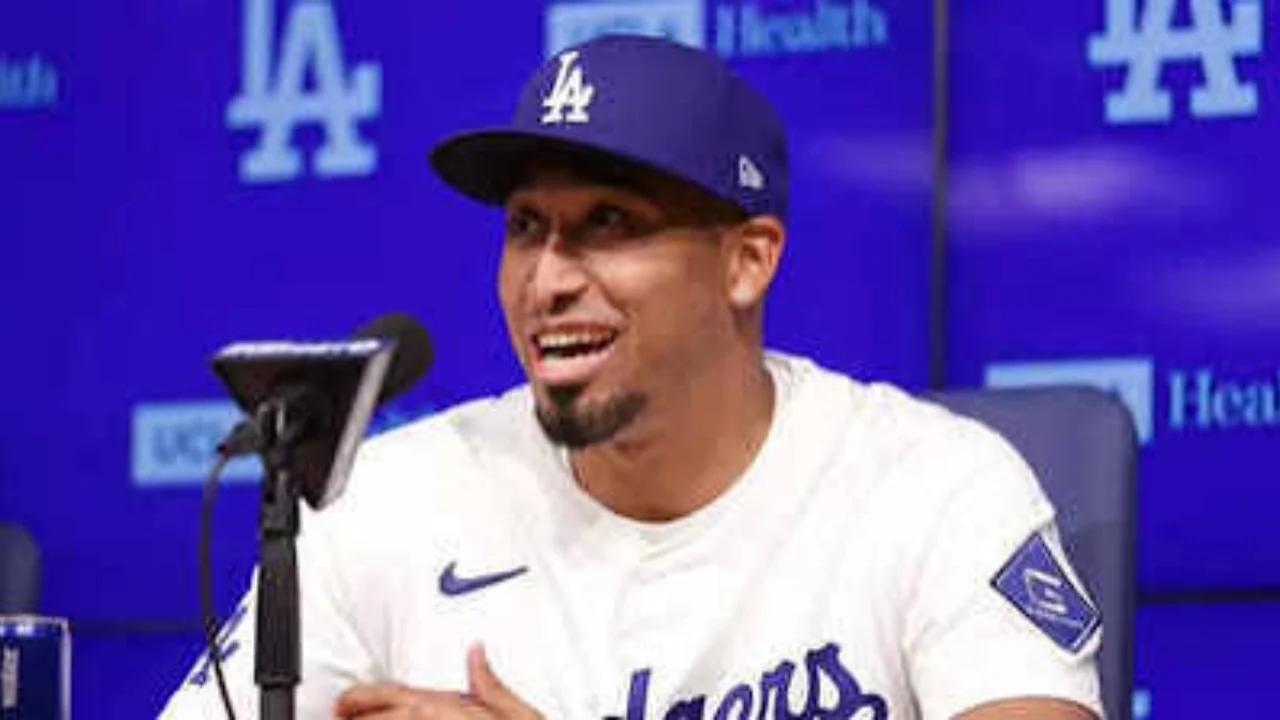
Edwin Diaz arrived in Los Angeles with the kind of reputation most relief pitchers can only dream about.
The Los Angeles Dodgers signed the veteran closer to a three-year, $69 million contract during the offseason, expecting him to become a major piece of their bullpen and, most importantly, a reliable option in the ninth inning. Diaz had spent years establishing himself as one of baseball’s most dangerous late-inning arms, so the move looked like a perfect match on paper.
The 2026 season, however, has been very different.
Instead of smoothly stepping into his expected role, Diaz has dealt with injuries, inconsistent performances and a loss of confidence at times. His first season with the Dodgers has become one of the more surprising stories surrounding the team’s pitching staff.
At one stage, his postseason place was not even guaranteed.
Yet October has arrived, and Diaz is still part of the Dodgers’ plans.
That alone tells part of the story. The Dodgers have not forgotten what Diaz is capable of doing when he is right, and his performances late in the regular season gave the club enough reason to keep believing he could contribute in the postseason.
Edwin Diaz’s 2026 Season Has Been Difficult
The numbers explain why Diaz’s first year in Los Angeles has been described as a disappointment.
Through 21 regular-season appearances, Diaz finished with a 2-2 record, an 8.68 ERA, a 1.98 WHIP and 28 strikeouts across 18.2 innings. His Baseball-Reference WAR was minus-0.9.
For a pitcher who was brought in specifically to handle high-pressure situations, those statistics are far below what the Dodgers expected.
Diaz has also been unable to stay healthy.
He underwent surgery in April to remove loose bodies from his right elbow, an issue that forced him to spend a significant portion of the season on the injured list. After returning in July, he later went back to the IL in August because of neck inflammation.
That created a difficult cycle.
Diaz needed regular work to regain his rhythm, but injuries repeatedly interrupted his progress. And whenever he returned, he had to perform immediately because the Dodgers were trying to protect leads during another competitive season.
The Dodgers Expected a Different Edwin Diaz
The expectations were enormous from the beginning.
Los Angeles did not sign Diaz to be just another middle reliever. The three-year, $69 million agreement represented a major investment in a pitcher who had already demonstrated that he could dominate hitters late in games.
The Dodgers envisioned Diaz taking control of the ninth inning.
Instead, the club eventually had to consider other options.
That became particularly obvious during a difficult stretch in August, when Diaz blew three saves over a four-game span. Manager Dave Roberts continued to use him because the team did not want to abandon a pitcher of his ability, but the situation became increasingly complicated.
Eventually, the Dodgers had to explore other closing options.
For Diaz, that was a significant change.
Closers are often judged harshly because their mistakes happen in the most visible moments of a game. A starter can allow several runs early and still settle down. A closer may throw only one inning, but if those three outs go badly, the entire game can turn around.
That is the reality Diaz faced.
Injuries Made the Situation Even Harder
It is impossible to discuss Diaz’s 2026 season without mentioning his health.
His first IL stint came after the elbow surgery. He missed a large chunk of the season before returning in late July.
His comeback initially offered some hope.
Diaz returned against the Seattle Mariners on July 29 and earned a save. His fastball reached 98 mph, and the Dodgers were encouraged by what they saw. At the time, Roberts said the team had become much better with Diaz back in the bullpen.
But the comeback did not immediately turn into a full recovery.
After another stretch of appearances, Diaz experienced neck inflammation and returned to the injured list in August.
Once again, the Dodgers had to move forward without him.
That made the path back to the closer role much more complicated.
Diaz Had to Earn His Postseason Opportunity
By September, the conversation around Diaz had changed.
Earlier in his career, the question would have been whether he should be closing games.
Now the question was whether he had done enough to even make the Dodgers’ postseason roster.
That is a remarkable change for a player who had just signed one of the biggest contracts ever given to a relief pitcher.
Roberts was clear that performance had to matter.
The manager said the Dodgers needed evidence that Diaz was healthy and capable of helping the club before committing to him for October.
That meant Diaz had very little room for error.
His comeback therefore became about more than statistics. He needed to demonstrate that his body was responding, his pitches were moving correctly and, perhaps most importantly, his confidence was returning.
A Strong September Changed the Conversation
Diaz eventually gave the Dodgers the evidence they wanted.
After returning from the injured list in September, he put together a much better stretch.
The source details you provided noted that he recorded five scoreless innings with nine strikeouts after his return, giving the Dodgers reason to believe that the old version of Diaz might still be somewhere inside the 2026 season.
MLB also reported that Diaz returned to the Dodgers in a lower-leverage role and immediately delivered a scoreless inning against San Francisco on September 18.
That was important.
The Dodgers did not necessarily need Diaz to suddenly become the unquestioned closer again. They needed him to show that he could get major league hitters out.
If he could do that consistently, his role could grow naturally.
Dave Roberts Saw Something Different
Roberts’ comments about Diaz late in the season were encouraging.
The Dodgers manager said Diaz was in as good a position physically and mentally as he had been all year. He also pointed to the return of Diaz’s swagger and energy.
That matters with a closer.
Confidence is not something that can be measured neatly in a box score, but anyone who watches baseball understands how important it can be for a reliever.
Diaz has always pitched with emotion.
The famous trumpet entrance, the intensity on the mound and the willingness to attack hitters are all part of his identity.
When that confidence disappears, even the best pitches can look different.
When it returns, Diaz can become a completely different pitcher.
The Dodgers are hoping that is what happened during September.
Edwin Diaz Still Has a Strong Postseason Track Record
One reason Los Angeles has continued to believe in Diaz is his history.
He is not an inexperienced pitcher suddenly trying to figure out October baseball.
Diaz has appeared in eight postseason games during his career, producing a 2.38 ERA with 15 strikeouts and two saves over 11.1 innings.
Those numbers are a reminder that his current struggles do not erase what he has done before.
The postseason can also change the way a pitcher feels.
One strong appearance can create confidence. One big strikeout can restore rhythm. A clean ninth inning can remind everyone why a pitcher earned his reputation in the first place.
For Diaz, October provides that opportunity again.
The Dodgers Have Other Bullpen Options
The biggest difference this time is that Los Angeles is not completely dependent on Diaz.
The Dodgers have developed other trusted late-inning options, especially after Diaz’s injuries forced the team to search for alternatives.
That has actually made the situation more interesting.
If Diaz pitches well, the Dodgers have another dangerous arm.
If he struggles, Roberts has other choices.
MLB reported before the NLDS that Diaz remained among the Dodgers’ trusted options despite his rocky first season in Los Angeles.
That is probably the best situation for the team.
There is no reason to force Diaz into a role simply because of his contract.
At the same time, there is no reason to ignore him if he is throwing the ball well.
October should be about performance.
Why the $69 Million Contract Still Matters
The size of Diaz’s contract naturally adds pressure.
Three years and $69 million is a huge commitment for any relief pitcher.
That price tag will follow Diaz throughout his time in Los Angeles, especially after a disappointing debut season.
But contracts do not determine who wins postseason games.
Pitching does.
If Diaz finds his form at the right time, the disappointing regular season could quickly become an afterthought.
Imagine a scenario where he enters a tight NLDS game, throws a clean eighth inning and strikes out two dangerous hitters.
The conversation changes immediately.
A few good postseason appearances can erase months of frustration from the public discussion.
That is the opportunity in front of him now.
Diaz Could Still Become a Major October Weapon
The Dodgers do not need Diaz to repeat every great season of his career.
They need a healthy version of him who can execute his pitches when the game is on the line.
His fastball remains capable of generating velocity, while his slider has long been one of the weapons that makes him difficult to hit.
When both pitches are working, Diaz can make even elite hitters look uncomfortable.
That is why the Dodgers kept working with him even when his 2026 results were poor.
They know the upside.
A reliever with Diaz’s experience and strikeout ability can change a postseason game in a matter of minutes.
The key is finding the right situations.
October Could Change Everything
For much of 2026, Diaz has been dealing with questions.
Is he healthy?
Can he regain his form?
Should he remain the closer?
Will he make the postseason roster?
Now, those questions have largely been answered.
He is in October.
The Dodgers believe he can help.
The remaining question is what role he will actually play and whether he can deliver when the pressure rises.
That will be determined on the field.
A Chance to Rewrite His First Dodgers Season
Edwin Diaz’s first season with Los Angeles has not gone according to plan.
The injuries were frustrating.
The high ERA was alarming.
The blown saves created more pressure.
Losing the unquestioned closer role was a major setback.
And the fact that his postseason roster spot was uncertain made the situation even more unusual.
But Diaz has been given another opportunity.
His late-season improvement gave the Dodgers enough confidence to carry him into October, and his previous postseason experience gives him something many younger relievers do not have.
He knows what the pressure feels like.
Now he has to show that he can handle it again.
For the Dodgers, the ideal outcome is obvious. They want the Edwin Diaz they believed they were signing when they gave him $69 million, not the pitcher who struggled through the middle of the season.
For Diaz, the postseason is a chance to change the story.
A difficult regular season does not have to define a career.
One dominant October can change the conversation very quickly.