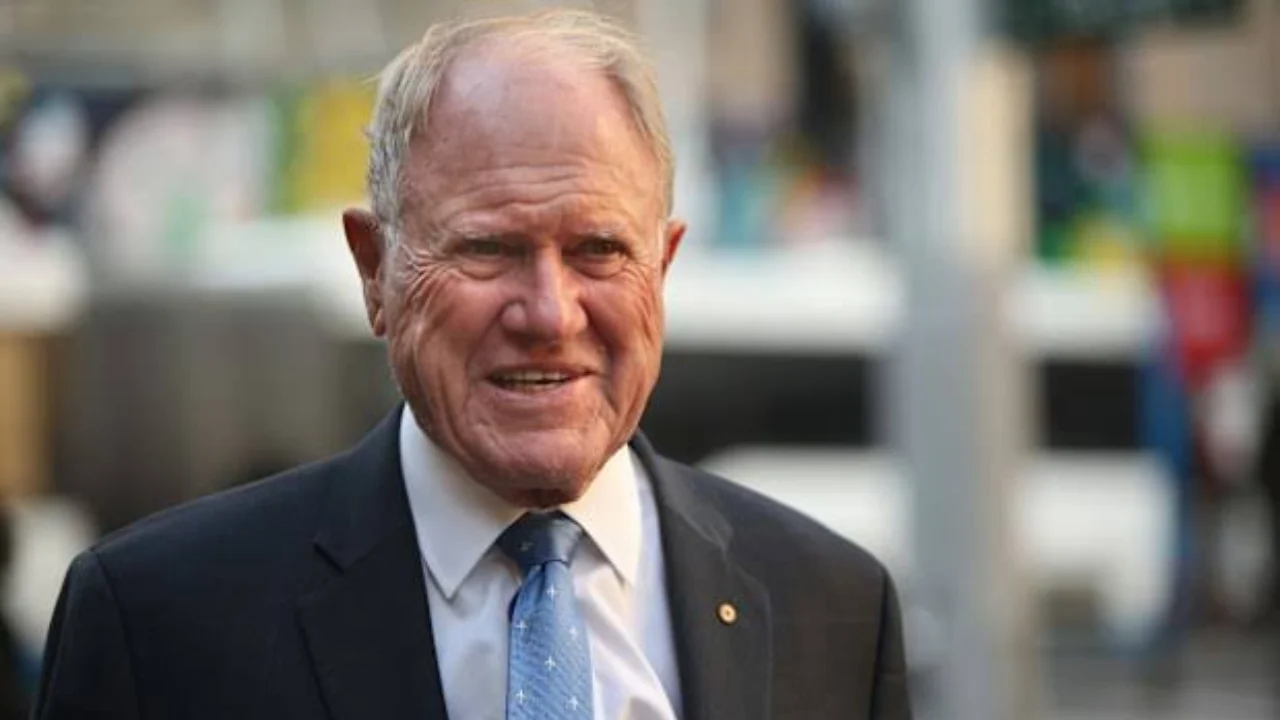
Bruce Baird, the former Liberal politician who served in both the New South Wales and Australian federal parliaments,
Baird’s death was announced on Friday, with his daughter, journalist Julia Baird, saying the family was in shock following his sudden passing. He was also the father of former New South Wales premier Mike Baird and Steve Baird.
Over a long public life, Bruce Baird became known for his work in NSW politics, his time as the federal member for Cook and his involvement in major national issues. He was also closely associated with Sydney’s successful bid to host the 2000 Olympic Games.
Away from Parliament, however, family and community were just as important to him. Julia Baird remembered her father as an energetic, outgoing man who enjoyed ocean swimming, friendships, parties, conversation and a good joke. She also wrote about the lessons he passed on to his children, encouraging them to be confident and ambitious.
Baird’s political colleagues remembered him for a different but connected set of qualities: public service, conviction, compassion and a willingness to stand by his principles.
His career crossed state and federal politics, but his influence also continued after he left elected office.
Bruce Baird Dies at 84
Bruce Baird died aged 84, according to his family and multiple reports published on October 2, 2026.
His daughter Julia shared news of his death on social media, describing the experience of losing a father and saying that the family was still coming to terms with what had happened.
The circumstances of his death were not detailed in the initial ABC report, so there is no need to speculate about a cause.
The announcement prompted tributes from political figures across party lines, including Prime Minister Anthony Albanese, former prime ministers John Howard, Malcolm Turnbull and Scott Morrison, and NSW Liberal leader Kellie Sloane.
Those tributes reflected the different stages of Baird’s career and the relationships he built during decades of public life.
A Father Remembered by His Children
While much of Baird’s public obituary focuses on politics, his daughter Julia’s tribute offered a much more personal picture.
She remembered him as someone who was full of energy and enjoyed being around people. Ocean swimming was one of his passions, and she described him as someone who loved friends, conversation and sharing stories.
Julia also reflected on the advice her father gave his three children.
His message was essentially to be bold, move forward with confidence and pursue their ambitions.
That advice appears to have stayed with his children throughout their own careers.
Mike Baird eventually became premier of New South Wales, while Julia built a career in journalism and writing. Steve also pursued his own professional path.
For the family, Bruce Baird was therefore not simply a public figure. He was a father whose influence continued through the lives of his children.
His Marriage to Judy
Family was at the center of Baird’s life outside politics.
Julia described her father as having been married to Judy, his first girlfriend and great love, for more than half a century. The NSW Liberal Party’s tribute following his death also described him as a devoted husband to his late wife Judy and a proud father and grandfather.
The description provides an important contrast to the political side of Baird’s life.
While his public career involved elections, Parliament, government and policy debates, his family life was described in much more personal terms.
Julia also remembered her father’s enjoyment of social occasions. She portrayed him as someone who loved parties, champagne, travel and humor.
That personality became part of how colleagues and friends remembered him too.
Bruce Baird’s Early Road to Politics
Baird’s path into politics was not completely straightforward.
In a podcast conversation in 2024, he reflected on his younger years and explained that the Vietnam War helped make him think more seriously about political issues.
He recalled being a young man who enjoyed surfing and socializing before his interest in public affairs developed.
Later, while he was in New York working as an Australian trade commissioner, a consul general encouraged him to consider entering politics.
Baird also recalled hearing a talk by an American Episcopalian priest about using one’s talents in service of a larger purpose.
Not long afterward, he was preselected for a NSW political seat.
From there, a political career that would eventually span both state and federal Parliament began.
His Career in the NSW Parliament
Baird was first elected to the NSW Parliament in 1984 as the member for Northcott.
He remained in state politics until 1995.
During his time in the NSW Parliament, he held several ministerial responsibilities. According to the NSW Liberal Party, he served as minister assisting the premier and treasurer, minister for transport, minister for the environment, minister for roads and minister for tourism. He also became deputy Liberal leader and held responsibility for Sydney’s Olympic bid.
His state political career established him as an experienced figure within the NSW Liberal Party.
It also gave him the opportunity to work on one of the projects that would become particularly important to his public legacy.
Bruce Baird and the Sydney 2000 Olympics
Baird played an important role in securing the 2000 Olympic Games for Sydney.
During his time in NSW politics, he served as minister responsible for Sydney’s Olympic bid. Contemporary and later accounts have credited him with playing a key role in the campaign that ultimately brought the Games to Australia.
The Sydney Olympics became one of the defining sporting events in Australian history.
For Baird, his involvement in the successful bid became one of the most recognizable achievements associated with his political career.
It was also an example of his work extending beyond ordinary parliamentary debate. The Olympic campaign involved promoting Sydney internationally and building support for the city as a potential host.
Bruce Baird Entered Federal Politics
After leaving NSW politics, Baird later moved to federal Parliament.
In 1998, he was elected as the Liberal member for Cook, an electorate covering parts of Sydney’s Sutherland Shire.
He represented the seat until 2007.
His federal career placed him within the Howard government era, when national debates over economic policy, immigration and asylum seekers were particularly significant.
Baird eventually retired from Parliament before the 2007 federal election.
Scott Morrison later won the seat and would eventually become prime minister.
His Views on Asylum Seeker Policy
One of the more notable aspects of Baird’s federal career was his position on asylum seeker policy.
Baird disagreed with parts of the Howard government’s approach to asylum seekers, particularly policies involving mandatory detention and offshore processing.
ABC reporting has described him as one of a group of Liberal politicians who challenged aspects of the government’s policy while continuing to argue their position from within the party.
Former prime minister John Howard, who served alongside Baird in federal Parliament, acknowledged those differences in his tribute.
Howard said Baird had disagreed with aspects of his government’s asylum seeker policy but had argued his position with integrity and in a way intended to preserve the government’s unity.
This became one of the defining elements of Baird’s federal political record.
A Role After Parliament
Baird’s public service did not end when he left elected politics.
In 2008, the Rudd Labor government appointed him chair of the Refugee Resettlement Advisory Council.
He also held leadership roles in organizations including the Tourism and Transport Forum and other public bodies.
Prime Minister Anthony Albanese referred to those later contributions when paying tribute to Baird, noting that his public service continued beyond his years in Parliament.
This period showed another side of Baird’s career.
Although he was a Liberal politician, his later public work was not confined to Liberal Party structures.
His appointment by a Labor government to the refugee advisory council was one example of his involvement continuing across political lines.
Tributes From Political Leaders
News of Baird’s death prompted tributes from people who had worked with him across different political eras.
Prime Minister Anthony Albanese described him as a true parliamentarian and noted that he had served Australia as a Liberal member at both state and federal levels.
Former prime minister Scott Morrison, who succeeded Baird as the member for Cook, remembered him as a mentor and friend. Morrison also highlighted Baird’s humor, heart and Christian faith.
Former prime minister Malcolm Turnbull described Baird as a genuine liberal and pointed to his willingness to put his principles ahead of personal advancement.
Former prime minister John Howard also remembered Baird as a personal friend and colleague.
These comments provide different perspectives on Baird, but they share a common theme: he maintained relationships across political differences.
Bruce Baird’s Christian Faith
Faith was another important part of Baird’s life.
His Christian beliefs were mentioned by several people who knew him, including Scott Morrison, who described him as someone who demonstrated his Christian values through his approach to politics.
Baird himself had previously spoken about the role faith played in his decision to enter public life.
The story he told about hearing an Episcopalian priest speak about using one’s talents helped explain why he eventually moved toward politics.
Faith and public service were therefore connected in his own account of his life.
A Political Career With Personal Convictions
Baird’s political record included moments when his personal convictions did not always align neatly with the government or party position.
His stance on asylum seeker policy during the Howard government was one example.
He remained a Liberal while challenging aspects of government policy, and former colleagues later remembered him for doing so respectfully.
That part of his career is important because it illustrates the distinction between belonging to a political party and agreeing with every position taken by a government.
Baird remained involved in public life while maintaining his own views.
His Order of Australia Recognition
In 2010, Bruce Baird was appointed a Member of the Order of Australia.
The honor recognized his contribution to public life and community affairs.
By that point, he had already completed his elected political career, but he continued to contribute through public organizations and advisory roles.
His recognition reflected a lifetime that had included state politics, federal politics, public administration and community involvement.
Bruce Baird’s Life Outside Politics
Perhaps the most revealing descriptions of Baird came from people discussing him away from Parliament.
His daughter remembered an active man who enjoyed ocean swimming and socializing.
The NSW Liberal Party described him as jovial and encouraging and said he was often the life of the party.
Those descriptions help explain why tributes to Baird have focused not only on his political achievements but also on his personality.
He was remembered as someone who enjoyed people and maintained friendships over many years.
That personal side of his character was clearly important to his family and colleagues.
Bruce Baird’s Family Legacy
Baird leaves behind a family that has also played a visible role in Australian public life.
His son Mike Baird became premier of New South Wales.
His daughter Julia Baird became a prominent journalist and writer.
His son Steve also built his own professional career.
Julia’s tribute made clear that the lessons her father taught his children were among the most lasting parts of his legacy.
His message to them was to be bold, pursue their ambitions and believe in themselves.
That advice can now be viewed as part of the family’s story rather than simply a father’s words to his children.
Remembering Bruce Baird
Bruce Baird’s career covered more than two decades in elected politics, followed by years of public service outside Parliament.
He represented Northcott in the NSW Parliament from 1984 to 1995 and later served as the federal member for Cook from 1998 to 2007.
He held several NSW ministerial positions and played an important role in Sydney’s successful bid for the 2000 Olympic Games.
In federal politics, he became known for his independent views on some asylum seeker policies, while continuing to work within the Liberal Party.
After Parliament, he remained involved in public affairs, including refugee resettlement and tourism and transport organizations.
But the tributes following his death show that his legacy cannot be reduced to political positions or parliamentary titles.
For his children, he was a father who encouraged them to dream big.
For his wife Judy, he was a longtime partner and great love.
For friends, he was an outgoing man who enjoyed swimming, parties, stories and laughter.
And for many political colleagues, he was a mentor and a public servant whose career crossed state and federal politics.
Bruce Baird died at 84, leaving behind a long record of public service and a family that continues to carry his influence forward. His sudden passing has brought tributes from across Australia’s political landscape, but the most personal remembrance may remain the one from his daughter, who described the shock of losing a father and the lasting effect he had on the three children he encouraged throughout their lives.